Email: sale@czjiexiang.cn Tel: 0519-87397888
Email: sale@czjiexiang.cn Tel: 0519-87397888
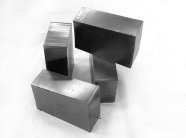
Magnesia refractories are alkaline refractory products manufactured from magnesite, seawater magnesite and dolomite. With periclase as the main crystalline phase and a magnesium oxide content of over 80%, they fall into the category of alkaline refractories. Non-ferrous metal smelting furnaces are core production facilities for the non-ferrous metallurgy sector. Researching the demands for refractory variety and quality driven by technological advances in non-ferrous smelting is essential to extending the service life and boosting output of smelting furnaces. The following elaborates on the applications of magnesia refractories in the lead and zinc industry.
A closed lead-zinc blast furnace is a special type of blast furnace designed to produce lead and zinc simultaneously. It operates with hot air at 800–850℃, and the furnace top maintains a high temperature of 1050–1100℃. Only slag tapholes in the furnace hearth and lead outlets in the forehearth are reserved.
The furnace hearth is lined with magnesia bricks and fitted with water jackets. The furnace body is built with high-alumina bricks, and the furnace top is sealed with monolithic high-alumina refractories. The forehearth adopts electric heating, yet its service life is shorter than that of the main furnace, mainly due to slag erosion and wear along the slag line. There are currently two such furnaces in service domestically. The forehearth linings are made of chrome slag bricks and alumina-chromium-titanium bricks respectively. Although their campaign life exceeds one year, it is still inferior to that of the main furnace. Extending the service life of electrically heated forehearths to match that of the main furnace is critical for improving the overall operating rate of closed lead-zinc blast furnaces.
The development of oxygen bottom-blown smelting technology originated from the upgrading of lead smelting processes and was first applied to primary lead production. At present, this technology is widely adopted by domestic lead smelters, with more than ten oxygen bottom-blown lead furnaces put into operation. Researches on supporting refractories for such furnaces have made solid progress. Further optimizing refractory materials to prolong furnace campaign life is a key factor for the sustainable development of oxygen bottom-blown smelting technology.
Fluidized bed roasters are thermal equipment for zinc concentrate treatment in hydrometallurgical zinc smelting and zinc distillation processes. Regardless of different atmospheres (acidifying roasting and oxidizing roasting) and structural designs, the furnace body is mainly lined with clay bricks. The distribution plate at the furnace bottom, feed prechamber and discharge outlets are constructed with cast clay refractory concrete. Future development trends for fluidized bed roasters include upscaling equipment capacity and wider application of monolithic refractories.
Magnesia refractories feature periclase as the predominant crystalline phase and contain over 80% MgO by mass. Subject to raw material composition, their main chemical components are MgO, Al₂O₃ and SiO₂. Since the melting point of MgO reaches 2800℃, the refractoriness of magnesia refractories can hit 2000℃, delivering outstanding high-temperature resistance.
Common varieties include magnesia bricks, magnesia-aluminum spinel refractories and so on. Among them, magnesia-chrome refractories are produced from magnesia and chromite, with magnesia as the main constituent.
Contact:
Phone: 13606126589
Tel: 0519-87397888
Email: sale@czjiexiang.cn
Add: No.1 Yangzi West Road, Shanghuang Town, Liyang City, Changzhou City
We chat


