Email: sale@czjiexiang.cn Tel: 0519-87397888
Email: sale@czjiexiang.cn Tel: 0519-87397888
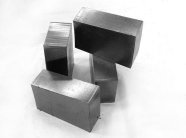
Magnesia-chrome bricks are mainly used in transportation, chemical, aerospace, rocket and other industrial sectors. Magnesium is one of the lightest practical metals: its specific gravity is approximately two-thirds that of aluminum and one-fourth that of iron. It features high rigidity and mechanical strength.
Magnesia-chrome bricks take MgO and Cr₂O₃ as their main components. They possess high hot strength, excellent refractoriness and superior thermal stability, and deliver strong resistance to erosion by basic slags while also tolerating acidic slags to a certain extent. Such bricks are widely applied in high-temperature industries. However, part of the trivalent chromium (Cr³⁺) in magnesia-chrome bricks can be converted into hexavalent chromium (Cr⁶⁺), forming toxic and carcinogenic compounds such as potassium chromate (K₂CrO₄). For this reason, chromium-free transformation has become a mandatory requirement for the use of magnesia-chrome bricks, especially in cement kilns of the construction industry, and finished cement products are prohibited from containing chromium.
The production process for firing magnesia-chrome bricks is roughly similar to that of magnesia bricks. During firing, direct bonding occurs between MgO, Cr₂O₃, Al₂O₃ and other components, producing direct-bonded magnesia-chrome bricks. Reactions of iron oxides will generate spinel and cause expansion, leading to loose structure. Co-sintered composite materials can also be used to produce magnesia-chrome bricks. In addition, there exist unburned magnesia-chrome bricks, such as those bonded with inorganic magnesium salt solutions. Unburned magnesia-chrome bricks feature simple production processes, low costs and good thermal stability, yet their hot strength is far lower than that of fired bricks.
In the late 1950s, the so-called direct-bonded magnesia-chrome bricks were developed. Manufactured at high firing temperatures with pure raw materials, these bricks form direct bonding between high-temperature phases including periclase and spinel, while low-melting phases such as silicates exist in isolated island-like distributions. This structure greatly improves the hot strength and slag resistance of the bricks.
Mixing fine powder prepared by grinding chrome ore and magnesia with coarse magnesia particles is an effective way to eliminate porosity during brick making. Compared with conventional products, magnesia-chrome bricks produced by this method have lower apparent porosity, as well as higher compressive strength, refractoriness under load and flexural strength. Magnesia-chrome bricks made from synthetic magnesia-chrome clinker — produced by pressing chrome-magnesite powder and firing at high temperatures — achieve better slag resistance and hot strength than ordinary varieties.
Other types include cast magnesia-chrome bricks manufactured by melting magnesia-chrome materials in electric melting furnaces, fused magnesia-chrome materials, and bricks made from fused particles.
Magnesia carbon bricks are composite refractories made from magnesia (a high-melting basic oxide with a melting point of 2800℃) and high-melting carbon materials that resist slag penetration, together with various non-oxide additives and carbon-based binders.
Magnesia-chrome bricks are refractory products dominated by MgO and Cr₂O₃, with periclase and spinel as the main mineral phases. Their primary raw materials are dead-burned magnesia and chromite ore.
Contact:
Phone: 13606126589
Tel: 0519-87397888
Email: sale@czjiexiang.cn
Add: No.1 Yangzi West Road, Shanghuang Town, Liyang City, Changzhou City
We chat


