Email: sale@czjiexiang.cn Tel: 0519-87397888
Email: sale@czjiexiang.cn Tel: 0519-87397888
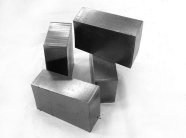
Magnesia-chrome bricks are mainly applied in the metallurgical industry for the construction of open-hearth furnace roofs, general furnace roofs, secondary refining furnaces and various non-ferrous metal smelting furnaces. Cast magnesia-chrome bricks are adopted for high-temperature zones on the walls of ultra-high power furnaces. Magnesia-chrome bricks made from synthetic materials are used in the lining renewal areas of secondary refining furnaces, while cast and synthetic magnesia-chrome bricks are applied in the lining renewal sections of non-ferrous metal flash smelting furnaces.
Magnesium-based alloys, with additional alloying elements, feature low density (1.8g/cm³ for magnesium alloys), high strength, high modulus of elasticity, good thermal performance and excellent wear consumption resistance. They outperform aluminum alloys in impact load resistance and show superior corrosion resistance against organic substances and alkalis. Main alloying elements include aluminum, zinc, manganese, cerium, thorium, as well as a small amount of zirconium or cadmium. Magnesium-aluminum alloys are the most widely used type, followed by plain magnesium alloys and magnesium-zinc alloys.
Refractory bricks for cement kilns are required to resist alkaline corrosion. Common basic refractory bricks include magnesia-chrome bricks, magnesia-iron spinel bricks, magnesia-aluminum spinel bricks and silicon-mullite bricks, alongside spalling-resistant high-alumina bricks.
Silicon-mullite bricks: Excellent thermal shock resistance, mechanical strength and wear resistance, ideal for transition zones.
Magnesia-chrome bricks: Form stable kiln coating, widely used in burning zones. Their drawbacks lie in poor thermal shock resistance. In addition, chromium contained in the bricks is highly toxic. For this reason, the production and application of magnesia-chrome bricks are gradually declining worldwide, and manufacturers are actively developing alternative products.
Magnesia-iron spinel bricks: Primarily used in transition belts. They deliver good seismic performance and structural recoverability, yet have relatively lower refractoriness.
Phosphate bonded bricks: Low refractoriness, but high strength and outstanding thermal shock resistance. They are commonly used for grate components and kiln hood linings.
Silicon-mullite bricks: Excellent thermal shock resistance, mechanical strength and wear resistance, suitable for transition zones.
Spalling-resistant high-alumina bricks: Containing a small amount of ZrO₂. Martensitic phase transformation generates microcracks during heating, endowing the bricks with high strength, good alkali resistance, spalling resistance and slag erosion resistance.
Refractories are non-metallic materials characterized by high temperature resistance, low volume change under heat and excellent resistance to rapid temperature fluctuations. As fundamental materials for high-temperature industries, refractories are indispensable for all high-temperature production sectors.
Nevertheless, toxic substances can be generated from certain raw materials under high-temperature service conditions, posing severe hazards to human health and the environment. With growing environmental awareness, eco-friendly and green refractories have been developed and promoted in recent years. Traditional materials such as magnesia-chrome bricks will leave toxic residues after use in thermal insulation projects, cement production and glass manufacturing.
Composed of magnesium oxide and chromium trioxide, magnesia-chrome bricks boast superior refractoriness, high hot strength and good resistance to acid erosion. With low thermal conductivity and good adaptability to acidic tailings, they have long been used in large cement rotary kilns, metallurgical and glass industries. However, trivalent chromium inside the bricks will convert into water-soluble hexavalent chromium at high temperatures. Hexavalent chromium is highly toxic and may cause serious pollution to human bodies, the ecological environment and groundwater
Contact:
Phone: 13606126589
Tel: 0519-87397888
Email: sale@czjiexiang.cn
Add: No.1 Yangzi West Road, Shanghuang Town, Liyang City, Changzhou City
We chat


