Email: sale@czjiexiang.cn Tel: 0519-87397888
Email: sale@czjiexiang.cn Tel: 0519-87397888
Copper production encompasses a wide range of processes among non-ferrous metals. China has adopted all mainstream copper smelting technologies worldwide and also developed indigenous processes represented by the silver-copper smelting method and oxygen bottom-blown smelting furnace.
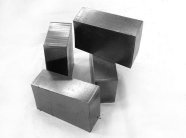
Magnesia refractories are produced from magnesite, seawater-derived magnesite and dolomite. With periclase as the main crystalline phase and magnesia content above 80%, they are classified as alkaline refractories. The following introduces their applications in the copper smelting industry.
The reaction shaft of a flash furnace operates at extremely high temperatures. High-speed gas flow carrying molten materials causes severe scouring and corrosion to the shaft wall, which therefore requires refractories with excellent resistance to high temperature, abrasion and corrosion. Fused magnesia-chrome bricks are currently applied here. To further protect the bricks, multiple layers of horizontal copper water jackets are embedded in the brickwork, and water-cooled copper tubes or vertical copper water jackets are installed between the brick lining and furnace shell. Ordinary magnesia-chrome bricks are used for the top and upper low-temperature zones of the reaction shaft.
The Noranda furnace is a large-scale matte smelting furnace successfully introduced and widely used in China. Multiple procedures including concentrate drying, roasting, melting and slag blowing are completed inside one furnace. Intense material agitation and furnace rotation impose stringent requirements on refractories for the furnace lining and hearth.
Ausmelt technology, also known as top-submerged lance smelting technology, is applied for matte smelting, with the Ausmelt furnace as the core equipment. The furnace consists of a cylindrical body connected to a tapered section on one side. A transition section links the tapered part to an upward vertical flue and waste heat boiler. The upper cone is equipped with lance ports, feed inlets, standby burners and sampling & observation holes. Tap holes for molten metal and slag are arranged at the furnace bottom, with the slag outlet set slightly higher. The entire furnace is enclosed by a steel shell.
Oxygen bottom-blown smelting is an independent technology developed in China for copper and lead production, and the oxygen bottom-blown smelting furnace serves as its key equipment. A set of oxygen lances are installed at the furnace bottom. The whole lining of this furnace is built with high-grade magnesia-chrome refractories, monolithic refractories and wear-resistant materials such as chrome-aluminum spinel bricks.
Developed domestically to replace traditional reverberatory furnaces for copper concentrate smelting, the silver-copper smelting furnace features a molten bath structure and realizes oxygen-enriched autogenous smelting. This process offers strong raw material adaptability, high smelting intensity, flexible fuel selection and low comprehensive energy consumption. The flue gas contains high concentration of sulfur dioxide, facilitating favorable environmental management.
Converters are the major equipment for converting copper matte into blister copper. Inside the converter, molten materials are vigorously agitated by high-pressure air or oxygen-enriched air, leading to severe scouring of the furnace lining. Addition of large quantities of solid slag and fluxes further accelerates lining erosion. The operating temperature fluctuates drastically: it can exceed 1350℃ during operation and drop rapidly below 1000℃ under wind load and slag action. Besides, the slag gradually changes from weakly alkaline to acidic throughout the process, putting forward extremely high requirements for refractory materials.
Anode reverberatory furnaces are widely used for blister copper refining. The furnace lining is mainly composed of magnesia-alumina bricks and magnesite bricks, while sintered magnesia-chrome bricks are adopted for partial slag lines. Most anode reverberatory furnaces have narrow inner space and arched roofs, whose service life is closely correlated with that of the furnace hearth. Generally, the service life of magnesite brick roofs is only 3 to 4 months.
Contact:
Phone: 13606126589
Tel: 0519-87397888
Email: sale@czjiexiang.cn
Add: No.1 Yangzi West Road, Shanghuang Town, Liyang City, Changzhou City
We chat


