Email: sale@czjiexiang.cn Tel: 0519-87397888
Email: sale@czjiexiang.cn Tel: 0519-87397888
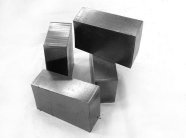
Light-burned magnesia ball refractories are inorganic non-metallic materials with a refractoriness above 1580℃. Refractoriness refers to the temperature at which a refractory cone sample resists softening and melting under high temperatures with no load applied, measured in degrees Celsius.
Light-burned magnesia balls are alkaline refractory products. The calcium oxide (CaO) inside can replace CaO in quicklime to maintain the basicity of final steelmaking slag and reduce quicklime consumption. CaO reacts with silica (SiO₂) in slag to form high-melting-point compounds including \(\ce{3CaO·SiO2}\), \(\ce{Ca2SiO4}\), C₃S and C₂S. Magnesia (MgO) serves as the main component of light-burned magnesia balls when sufficient CaO is present in the slag.
Adjusting MgO content in slag helps lower slag superheat and increase slag viscosity. Meanwhile, the reaction \(\ce{C + FeO = Fe + CO}\) reduces ferrous oxide (FeO) content and the saturated solubility of MgO, enabling MgO in slag to reach or exceed saturation more easily. The modified slag features high refractoriness and proper viscosity, fully meeting the requirements for slag splashing furnace protection. For this reason, moderate carbonization treatment can be conducted on light-burned magnesia balls.
There are four major advantages in applying light-burned magnesia balls:
Suitable for slag splashing furnace protection when the slag basicity ratio \(\boldsymbol{R(CaO/SiO_2)}\) is approximately 3.5.
Optimal residual slag volume: 90–100 kg per ton of steel.
Recommended slag splashing duration: 2–4 minutes.
Effective control over the MgO content of final slag.
Light-burned magnesia balls produced via upgraded technologies have reached the high-end level of the industry. Years of operational and production practice have verified that the technical renovation has greatly improved the production line with higher mechanization and automation levels. It optimizes the working environment, cuts labor intensity and boosts labor productivity. Traditional production defects have been effectively resolved, and the surface quality of finished products is markedly enhanced.
The balling rate rises from 50% to 85%–90%. Product density is also improved. The tumbler strength index increases from 30%–45% to 64%–68%, exceeding the industry standard of 58%. The pellets show no obvious breakage during loading, unloading, transportation, extrusion and dropping, and customers have raised no complaints regarding product surface quality.
It is evident that light-burned magnesia balls require strict control over internal quality, external appearance and structural strength. Reliable strength is the fundamental guarantee for good surface performance.
Refractories boast a long history. The combination of refractories and high-temperature technology dates back to the Middle Bronze Age. During the Eastern Han Dynasty of China, clay-based refractories were used to make kiln linings and saggar for porcelain firing.
In the course of development, unshaped refractories that require no firing and low-energy refractory fibers have come into being. In modern times, driven by aerospace, atomic energy, new energy and other technologies, refractories with excellent overall performance such as erosion resistance, corrosion resistance and thermal shock resistance have been widely adopted.
Contact:
Phone: 13606126589
Tel: 0519-87397888
Email: sale@czjiexiang.cn
Add: No.1 Yangzi West Road, Shanghuang Town, Liyang City, Changzhou City
We chat


