Email: sale@czjiexiang.cn Tel: 0519-87397888
Email: sale@czjiexiang.cn Tel: 0519-87397888
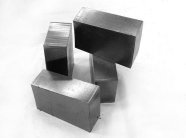
Wear resistance refers to the capability of refractories to resist external abrasion. High requirements are set for the wear resistance of magnesia refractories used in transition zones of cement rotary kilns, circulating fluidized bed boilers and cooling sections of dry quenching furnaces. This paper analyzes the influencing factors, testing methods and characterization techniques for the wear resistance of magnesia refractories.
Strength, hardness, bulk density, bonding strength and microstructure exert major impacts on the wear resistance of refractories. Service temperature also plays a certain role. Extensive researches have been carried out to improve material wear resistance. Besides increasing bulk density and reducing internal defects, the mainstream technical approaches are as follows:
Refine grain size and enhance the overall structural uniformity;
Add reinforcing phases to prepare composite materials;
Improve toughness via phase transformation.
Generally, materials with higher strength deliver superior wear resistance under the same hardness. The wear performance can also be improved by selecting high-wear-resistance base materials, introducing second-phase particles with high hardness and strength, and adopting optimized particle size distribution.
Sliding friction and wear tests: four-ball test, pin-on-plate test, ring-block test, reciprocating pin-on-plate test, abrasive wear test, rolling wear test, ring rolling test and four-ball rolling test.
Erosion wear test.
A high-precision analytical balance is used to measure the mass difference of samples before and after wear testing. The mass loss rate is calculated to evaluate wear resistance. This method is simple and widely applied.
The total wear loss can be calculated by measuring volume changes before and after friction. During the wear process, grains on the sample surface gradually detach, resulting in changes in mass and volume. Volume variation is adopted to characterize wear resistance accordingly.
Wear is categorized into four types: corrosive wear, abrasive wear, adhesive wear and fatigue wear. The corresponding wear mechanisms include cutting, adhesion and fatigue. The main influencing factors are summarized below:
Load: Wear aggravates as the applied load increases.
Rotational speed: Higher rotational speed leads to more severe wear.
Temperature: Low-temperature wear is mainly governed by fatigue, adhesion and spalling. At high temperatures, wear is dominated by oxidation, adhesion and peeling.
Abrasive concentration: Wear becomes more serious with the rise of abrasive concentration.
Refractoriness is measured by the three-cone comparison method. Test specimens are fabricated into standard refractory cones. Under specified atmosphere, heating rate and thermal conditions, the bending degree of the test cone is compared with that of the standard cone.
Liquid phase may form inside the cone at high temperatures. With the temperature rising, the liquid phase content increases and its viscosity decreases, which softens the cone. The cone gradually bends under its own weight as softening proceeds. When the apexes of both the test cone and standard cone bend down to touch the base simultaneously, the bending temperature of the standard cone is defined as the refractoriness of the tested material.
Contact:
Phone: 13606126589
Tel: 0519-87397888
Email: sale@czjiexiang.cn
Add: No.1 Yangzi West Road, Shanghuang Town, Liyang City, Changzhou City
We chat


